7 Things to Know Before You Trade Binary Options as a Beginner
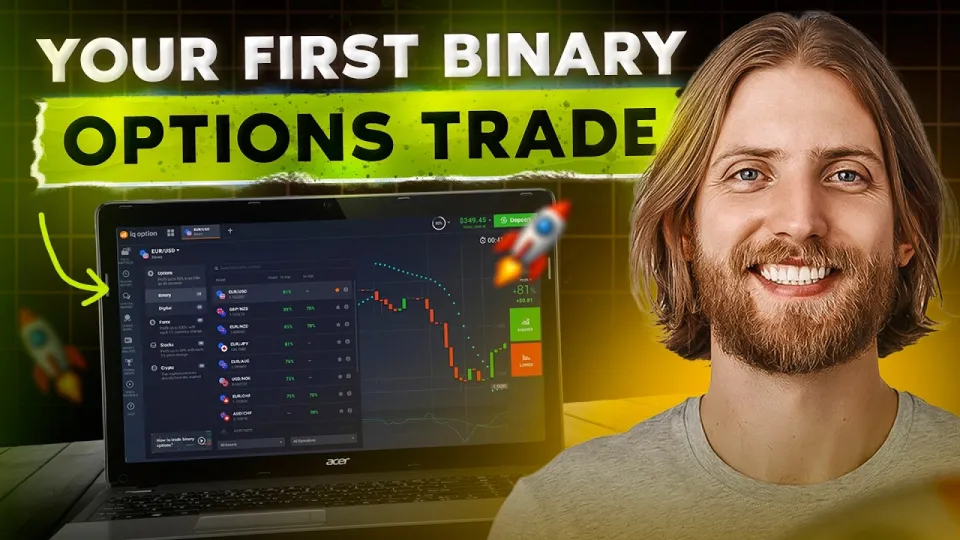
Video: Binary Options | Binary Options Tutorial for Beginners | Where Should You Start?
· based on the channel Binary options tutorial for beginners
Binary options are fixed-risk contracts: you pick an asset, predict whether its price will be higher or lower at a set expiry time, and either collect a fixed payout or lose your entire stake. For a beginner the correct starting point is not a strategy but arithmetic — understanding payout percentages, expiry length and stake size before the first real trade. The platform used in the walkthrough, Quotex, is where the tutorial starts with a demo account, and that demo phase is the part most beginners skip.
What a binary option actually is and how the payout works
A binary option has only two outcomes, which is where the name comes from. You choose an asset such as EUR/USD, gold or Bitcoin, a direction (higher or lower than the current price) and an expiry time. If the price finishes on your side at expiry, the broker credits the agreed payout; if not, the stake is gone.
The critical number is the payout percentage, usually quoted between 70% and 95% depending on the asset and expiry. A 80% payout means a $10 trade returns $8 profit on a win and loses $10 on a loss. Break-even at that payout requires a win rate above roughly 55.6%, not 50%. Many beginners assume they only need to be right half the time; with typical payouts they do not.
How to start binary options trading step by step
Starting correctly means building the habit of testing before risking money. The sequence below is the one the video breakdown follows, and it works on any of the major platforms.
- Register on a broker and open a demo account first. Quotex, Pocket Option and Binarium all offer demo balances, and the demo uses the same price feed as the live account.
- Choose one liquid asset and stay with it — EUR/USD or a major crypto pair — instead of jumping between dozens of instruments.
- Set the expiry to at least 5-15 minutes while learning. Very short expiries of 30-60 seconds behave closer to a coin flip and give you no time to read the chart.
- Fix your stake at 1-2% of the account balance per trade so a losing streak of ten trades costs 10-20%, not everything.
- Log every trade: asset, direction, expiry, result. After 50-100 demo trades you have data instead of a feeling.
- Only move to a live account with money you can afford to lose, and keep the same stake rules.
Which platforms beginners compare: Quotex, Pocket Option and Binarium
The three brokers featured in the video are the ones most beginners encounter first, and they are broadly similar in structure. All three offer a web and mobile interface, demo and live accounts, payouts in the 70-95% range, and expiries from under a minute to several hours. Differences come down to asset lists, minimum deposits, withdrawal methods and interface language.
Quotex is known for a simple chart-based interface and a low minimum deposit. Pocket Option adds social trading features and a wider set of payment methods. Binarium is often chosen by traders who want a broader set of assets and account tiers. None of these differences change the underlying math — the payout percentage and your discipline decide the result, not the platform skin.
The typical beginner questions and mistakes
The questions beginners ask most often are about minimum deposits, whether the platform is legitimate, and how long it takes to become profitable. The honest answers: minimum deposits are usually $10-$50; regulation varies by jurisdiction and you should check what entity holds your account and what the withdrawal terms are before depositing; and profitability is a matter of months of recorded results, not days.
The recurring mistakes are consistent. Traders chase losses by doubling stakes after a loss, which turns a bad streak into a wiped account. They switch strategies after three losing trades. They trade news events with no idea that volatility spikes widen spreads and skew short expiries. And they treat a 90% payout as a 90% chance of winning, which it is not.
Risk management rules that matter more than any signal
Position sizing is the single lever a beginner fully controls, and it should be fixed before the first trade. With a 1% stake, ten consecutive losses cost about 10% of the account; with a 10% stake, the same streak costs 65% and leaves almost nothing to recover with. A common rule is to cap total daily loss at 5% of the balance and stop trading when it is hit.
Expiry choice is the second lever. Short expiries feel exciting and produce fast feedback, but they multiply the number of decisions per hour and therefore the cost of mistakes. Longer expiries on liquid assets give the chart time to develop and make the analysis you did actually matter. Finally, treat the demo account as a measurement tool: if the strategy does not survive 100 demo trades, it will not survive live spreads and emotions either.
Where to find the platforms and tools from the breakdown
All resources referenced in the video are collected here so nothing has to be searched for separately.
- Quotex — open an account and start on demo
- Pocket Option — register and compare payouts
- Binarium — create an account and review the asset list
- NordVPN — protect your connection when trading on public networks
Conclusion
Binary options reward arithmetic and discipline far more than prediction: at an 80% payout you need a win rate above 55.6% just to break even, so stake size and expiry choice decide survival. Start on a demo account with one asset, log at least 50 trades, and only then consider live money at 1-2% per trade. The video breakdown on the Binary options tutorial for beginners channel walks through the platform setup and the first trades in that order. If you want to follow along, register on Quotex and open a demo account before placing any live trade.
Key takeaways
- A binary option pays a fixed amount if the price finishes on the chosen side at expiry, and the full stake is lost if it does not.
- Typical payouts sit between 70% and 95%, so a 50% win rate still loses money over time.
- Expiries range from 5 seconds on some platforms to one hour or more; short expiries magnify the house edge.
- Quotex, Pocket Option and Binarium are the three platforms featured in the video breakdown.
- A 1-2% stake per trade keeps a beginner able to survive a losing streak of 10 trades.
Questions & answers
How much money do I need to start trading binary options?
Most brokers accept a first deposit of $10-$50, and the three platforms in the breakdown fall in that range. That said, the deposit is not the real requirement — you need enough balance that a 1-2% stake per trade is still a meaningful position. Starting on a demo account costs nothing and should come first.
What win rate do I need to be profitable?
It depends on the payout. At 80% you need a win rate above about 55.6% to break even; at 90% the threshold is roughly 52.6%. Because a loss costs the full stake while a win pays only the percentage, a 50/50 record loses money over time.
Are short expiries of 30-60 seconds a good idea for beginners?
No. Very short expiries reduce the trade to a near coin flip, multiply the number of decisions per hour and make chart analysis almost irrelevant. Expiries of 5-15 minutes give the price time to move and are a more reasonable starting point.
How long should I stay on a demo account?
Long enough to collect data: at least 50-100 logged trades with a fixed stake and a fixed expiry. If the results are not positive on demo, live trading with real spreads and emotions will not improve them.
Source: Binary Options | Binary Options Tutorial for Beginners | Where Should You Start? · Markdown version