What Is a Meme Coin and How Do Traders Actually Make Money on It?
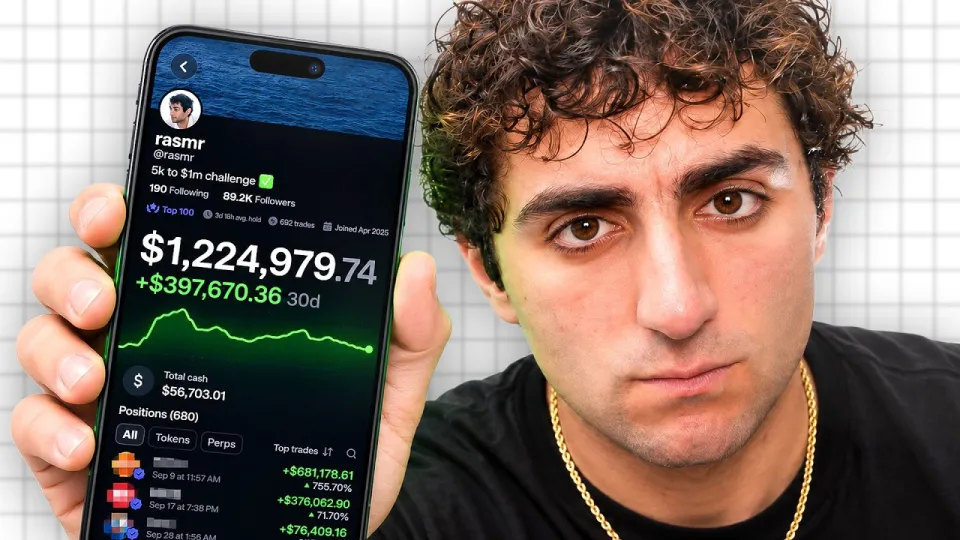
Video: 5 Years of Memecoin Knowledge in 12 Minutes
You can order the same kind of articles for your own video to boost it on YouTube and Google. Just message the Telegram bot @sat_sit_bot. The bot writes and publishes the articles itself (with your YouTube video embedded) on popular topical websites (no ads). Try it free: 50 articles on us.
· based on the channel rasmr
A meme coin is a cryptocurrency with no product, cash flow or roadmap behind it — its price is set by narrative, community attention and how much liquidity sits in the pool at any given moment. Traders make money on memecoins by entering early, sizing positions so a total loss does not hurt, and selling into strength in tranches before the crowd does. The rest of this guide breaks down how the mechanics work and where most participants go wrong; the trading setup used in the breakdown is available via registration on FOMO.
What actually makes a meme coin price move
A memecoin chart is a liquidity and attention chart, not a valuation chart. When a token launches on a decentralized exchange, the creator seeds a pool with a small amount of capital, and every buy pushes the price up along a bonding curve or an automated market maker formula. That means a few thousand dollars of buying can move a token from a $20k market cap to $200k in minutes, and the same amount of selling can erase it.
Three variables do most of the work:
- Liquidity depth. Thin pools mean violent moves in both directions. A token with $15k of liquidity cannot absorb a $10k sell without collapsing 40–60%.
- Narrative. A ticker tied to a trending event, a public figure or an in-joke spreads faster than a generic "dog coin" clone. Narrative decides whether new buyers arrive after the first candle.
- Holder distribution. If one wallet holds 8–15% of supply, that wallet is the exit liquidity problem. Check the top holders before anything else.
Supply mechanics matter too. A token with a 1 billion supply and a $1M market cap trades at $0.001 — the absolute price means nothing, only market cap and liquidity do. New traders routinely confuse a "cheap" price with upside.
How traders actually profit from meme coins
The money in memecoins is made on entry timing and exit discipline, not on holding. The typical profitable pattern looks like this: buy a small position within the first minutes of a launch that has a credible narrative and a clean holder list, then sell 30–50% of the position once the token doubles or triples, and let the remainder run with a stop at breakeven.
Concretely, a workable framework:
- Risk per trade: 1–3% of the portfolio. A memecoin should be able to go to zero without changing your month.
- First scale-out: at 2x, sell enough to recover the initial capital.
- Second scale-out: at 4–5x or when market cap hits the range where similar tokens historically topped.
- Runner: keep 20–30% with a trailing stop, accepting that it may round-trip to zero.
Market cap ranges are the practical reference point. Tokens that launch around $10k–$50k and reach $1M–$5M are already in the zone where early wallets, snipers and the launch team typically distribute. That is not a reason to avoid the trade — it is a reason to have sold part of the position before that zone.
Why emotions destroy memecoin accounts
Emotional trading is the single most common cause of losses in this niche, and it shows up in two predictable forms. The first is refusing to take a loss: a trader watches a position fall 60% and holds because "the chart will come back", while the liquidity that would let them exit is being removed. The second is greed on a winner: a position goes up 50–100%, the trader adds size at the top, and the whole gain round-trips.
The fix is mechanical, not psychological. Write the entry, the first exit and the invalidation level down before buying. Use limit orders for scale-outs so the decision is made when you are calm, not when the chart is vertical. And stop comparing unrealized numbers to your bank account — a position showing a large profit is not money until it is sold.
Where early entries actually come from
Early access to launches is organized, not accidental. Launch teams announce tokens to private groups and inner circles before the public pool opens, which is why some wallets are always in the first block and retail buyers are always late. A trader watching a public chart is usually buying from those wallets.
That does not make the game unwinnable, but it changes the strategy. If you cannot be in the first minutes, do not pretend to be a sniper — instead, wait for the first pullback after launch, confirm that liquidity is locked or burned, check that the top 10 holders are not a single cluster, and enter with a smaller size. Paying a slightly worse entry for a clean structure is better than buying a token that was designed to be dumped on you.
Common questions traders ask before their first memecoin trade
Most beginner doubts repeat the same handful of themes. Here is how to think about them.
"How do I know a coin will rug?" You cannot know for certain, but you can price the risk. Unlocked liquidity, a single wallet holding more than 10% of supply, a team that minted the token five minutes ago and a narrative that only exists in one Telegram chat are all red flags. Absence of red flags is not a guarantee — it just means the odds are less bad.
"Should I start small?" Yes. Starting with capital you can lose entirely is the correct approach, because the first several trades are tuition. Small size also keeps the emotional pressure low enough that you can actually follow your own exit plan.
"What about coins tied to upcoming events or games?" Event-based tickers can pump on hype, but they have no mechanism to hold value after the event passes. Treat them as short-duration trades with a hard exit date, not investments.
"Is it worth holding a winner for the long term?" Almost never in this category. Memecoins have no earnings, so there is no valuation floor. The historical pattern is a fast rise, a long decay, and occasional revival spikes driven by the same community.
Useful links
The bottom line on meme coins
Memecoins are a liquidity and attention game with a short half-life, and the traders who survive them treat every position as expendable from the moment it is opened. The edge is not in finding the next 100x — it is in sizing small, selling in tranches, and refusing to let a green number on a screen turn into a round trip. The breakdown of these mechanics comes from the channel rasmr, whose 12-minute summary of five years of memecoin experience is a useful starting point before risking real capital. If you want to test the workflow with a live account, start with FOMO registration and keep the first positions deliberately small.
Key takeaways
- A meme coin is a token whose price is driven almost entirely by narrative, community and liquidity rather than cash flow or product revenue.
- Most memecoin losses come from buying after a vertical candle and holding through the first distribution instead of scaling out.
- Position sizing, a pre-set exit plan and ignoring unrealized profit screenshots matter more than picking the next winner.
- Launch access and early entries are usually organized in private groups, so retail traders rarely buy the true bottom.
- Selling into strength in tranches beats trying to call the exact top, which almost nobody does consistently.
Questions & answers
What is a meme coin in simple terms?
A meme coin is a token whose value comes from community attention and narrative rather than revenue or a product. Its price is set by how much liquidity sits in the trading pool and how many new buyers arrive, which is why it can move hundreds of percent in minutes and collapse just as fast.
How do traders avoid round-tripping a big profit?
They decide on exit levels before entering and place limit orders for the first scale-outs. Selling 30–50% at 2x and another chunk at 4–5x locks in real money, and the remaining runner gets a trailing stop. A large unrealized gain is not profit until part of the position is sold.
Can you tell in advance if a memecoin will rug?
Not with certainty, but you can screen for the usual warning signs: unlocked or unburned liquidity, one wallet holding a large share of supply, a brand-new deployer wallet and a narrative that exists only in one chat. Fewer red flags lowers the odds of a rug but never removes the risk.
How much capital should a beginner put into memecoins?
Only an amount that can go to zero without affecting your finances, typically 1–3% of the portfolio per trade. Small size keeps the emotional pressure low enough to follow an exit plan, and the first trades should be treated as tuition rather than as a source of income.
Source: 5 Years of Memecoin Knowledge in 12 Minutes · Markdown version